
What’s New and Why It Matters
City councils are greenlighting warehouse farms at record pace, and big food distributors are locking in decade-long contracts for hyper-local greens. The pivot isn’t sentimental; it’s about hard numbers. When a storm wipes out a county’s crops, a city-grown shipment still lands on time. That reliability is why 2026 buyers are paying a premium for produce grown within city limits.
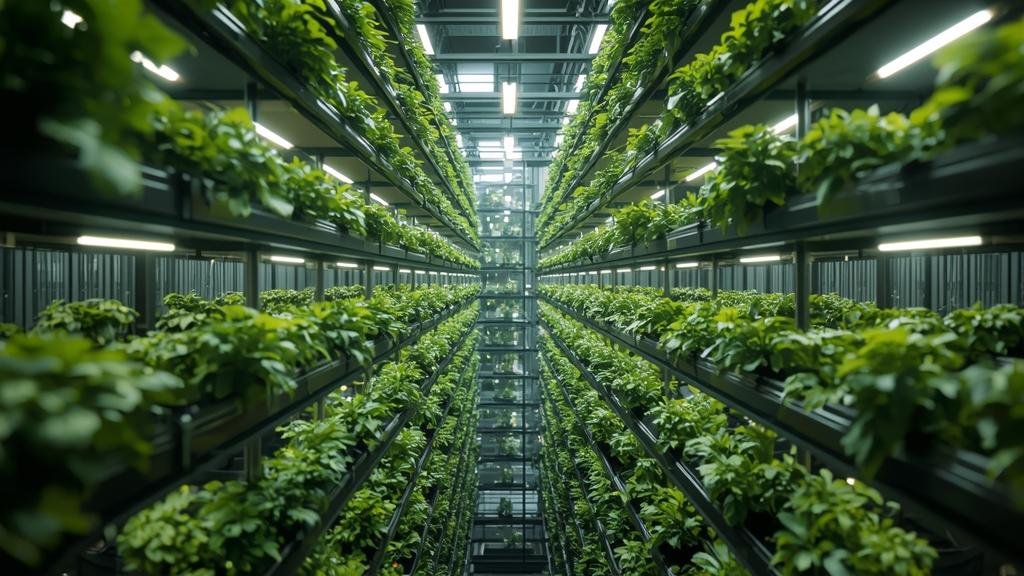
At the core is the maturation of Vertical Farming Tech. The latest sensor arrays, AI-driven dosing, and energy-efficient LEDs have moved from pilot to production. Operators report tighter margins and higher yields, and the software layer now standardizes output across sites. Think of it as industrial agriculture with cloud-native controls.
Meanwhile, standards and data interoperability are improving. The ecosystem is coalescing around APIs that let farm management software talk to climate controllers, nutrient dosers, and even building HVAC. That’s where Agritech 2026 shows up in real deployments: shared benchmarks, repeatable playbooks, and fewer one-off integrations. If you’ve been waiting for vertical farming to feel less like a science experiment and more like a utility, this is the year.
Quick takeaways
-
- AI control loops now auto-tune light spectra and nutrient ratios in real time, reducing manual tweaks.
-
- Modular rack designs cut deployment time by 30–40% versus legacy builds.
-
- Energy use per kilo of greens is down 15–25% thanks to better LEDs and heat recovery.
-
- Remote ops centers can manage multiple sites with standardized recipes and alerts.
-
- Supply contracts are longer and more predictable, improving ROI for operators.
Key Details (Specs, Features, Changes)
Compared to the 2022–2023 era, the current generation of systems swaps brittle, bespoke hardware for modular components with drop-in compatibility. Rack frames now accept multiple lighting form factors, and nutrient dosers ship with calibrated probes that self-check drift. The software layer has shifted from siloed on-prem dashboards to cloud-first platforms with robust APIs and role-based access. This reduces integration costs and makes multi-site rollouts feasible.
What changed vs before: Early systems relied on constant manual intervention—operators adjusting pH by hand, swapping lights on fixed schedules, and reacting to crop issues after the fact. Modern setups use closed-loop AI that correlates sensor data (light, CO2, airflow, root-zone EC/ pH) and makes micro-adjustments every few minutes. Yield variance across batches is tighter, and labor is redirected from firefighting to optimization. In short, the tech stack moved from “collects data” to “acts on data automatically.”
On the hardware side, LED fixtures deliver higher micromol/J efficiency and tunable spectrums that match plant photobiology phases. Climate control units now recover waste heat and condensate, recycling water and lowering HVAC loads. Trays and channels are designed for faster sanitation, and computer vision spots early-stage disease before it spreads. Operators can spin up a new bay, load a recipe, and have the AI lock in target metrics within hours rather than days.
Operationally, procurement has shifted from buying a one-off system to subscribing to a platform. Vendors bundle firmware updates, remote diagnostics, and recipe libraries under service agreements. The result is lower downtime and predictable operating costs. For buyers, the decision matrix is less about the cheapest hardware and more about the reliability of the control loop and the maturity of the vendor’s support stack.
How to Use It (Step-by-Step)
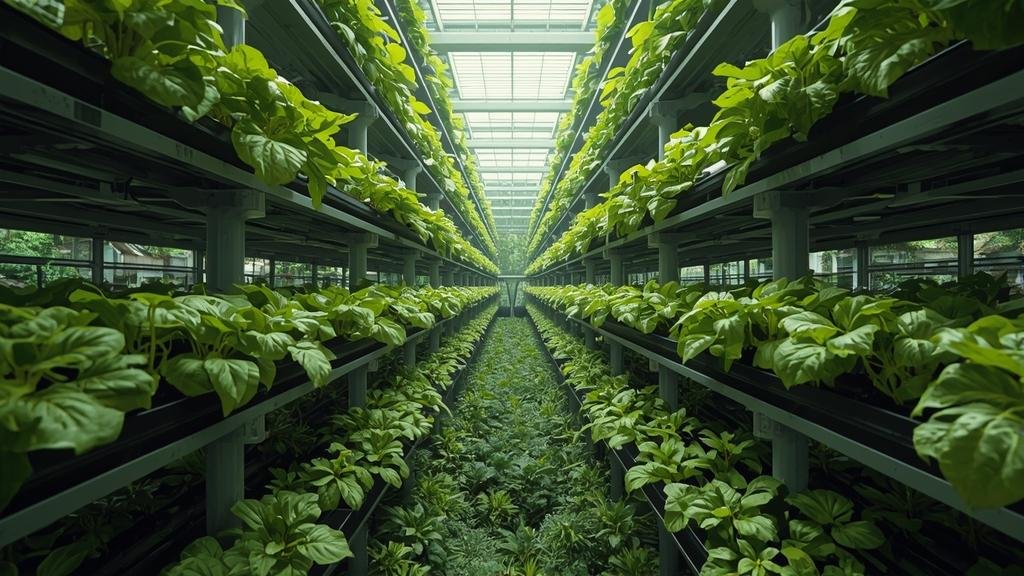
Below is a practical deployment path for a 5,000–10,000 sq ft urban farm. Scale the steps for smaller or larger footprints. The goal is to get Vertical Farming Tech online fast while maintaining control over costs and quality.
-
- Site and power: Confirm ceiling height (≥ 3.5 m), floor load capacity, and three-phase power. Budget 18–25 W per square meter for lighting plus HVAC and pumps. Plan heat exhaust routes to avoid warming adjacent spaces.
-
- Modular layout: Choose rack rows with 1.2 m aisle widths for trolleys. Map water and power drops every 2–3 bays. Keep maintenance clearance behind racks for quick access to sensors and lines.
-
- Lighting and optics: Install tunable LED bars with PAR sensors. Set baseline DLI (daily light integral) per crop. Calibrate spectra for propagation vs. finishing; avoid “one recipe fits all.”
-
- Climate and airflow: Balance dehumidification with airflow. Target VPD (vapor pressure deficit) 0.8–1.2 kPa for leafy greens. Use oscillating fans to break boundary layers and prevent microclimates.
-
- Water and nutrients: Use reverse osmosis input. Set EC and pH setpoints per stage. Enable automated dosing with failsafes (e.g., dose lockout if a sensor drifts beyond tolerance).
-
- Control stack: Connect PLC/ controllers to a cloud platform via secure gateways. Implement role-based access. Enable alerts for anomalies (e.g., pH swing > 0.3 in 10 minutes).
-
- AI commissioning: Run a 72-hour “learning mode” where the system logs sensor correlations without aggressive control. Then enable closed-loop with conservative limits and gradually widen them as confidence builds.
-
- Recipes and SOPs: Load vendor recipe templates. Create SOPs for sanitation, transplanting, and harvest. Train staff on what the AI does vs. what humans must verify.
-
- Monitoring and KPIs: Track yield per square meter per week, energy per kilo, and rejection rate. Review AI decisions weekly; adjust guardrails, not just setpoints.
-
- Scale plan: Once one bay hits steady-state KPIs, clone the configuration to the next bay. Use the same image and recipe to reduce variance. Standardize spare parts and consumables.
Real-world example: A Chicago operator deploying Agritech 2026 standards used pre-certified modules and cut commissioning time from 10 days to 4. They ran parallel nutrient loops for two cultivars of basil, letting the AI adjust DLI and EC independently. After three weeks, biomass variance dropped by 18% and energy per tray fell 12% through heat recovery tuning.
Pro tip: Avoid “set and forget.” The AI will optimize within guardrails, but your job is to update guardrails as you learn. Treat the system like a pilot with continuous improvement, not a finished appliance.
Compatibility, Availability, and Pricing (If Known)
Compatibility has improved dramatically. Most modern controllers support Modbus TCP, MQTT, and REST APIs, allowing integration with building management systems and third-party analytics. If your vendor uses a proprietary protocol, ask for a gateway with documented endpoints. For lighting, expect DALI-2 or 0–10 V control; verify dimming resolution and spectral tuning ranges.
Availability varies by region. Major vendors are prioritizing metro areas with stable power and water infrastructure. Lead times for racks and LEDs are generally 6–10 weeks, while cloud platform onboarding can be same-week if credentials are ready. Custom builds (e.g., retrofits into older warehouses) can push timelines to 12–16 weeks due to electrical upgrades.
Pricing is not one-size-fits-all. For a 5,000 sq ft build, hardware (racks, LEDs, sensors, dosing, climate units) often lands in the low-to-mid six figures, with software and support as a monthly subscription. Energy rebates and municipal incentives can offset 10–20% of capital costs in some markets. Operators should model ROI on yield consistency and delivery reliability, not just sticker price.
Unknowns to clarify with vendors: firmware update cadence, sensor calibration intervals, warranty terms for LEDs, and data ownership policies. Ask for a sandbox environment to test API integrations before committing.
Common Problems and Fixes
Symptom: pH drifts upward overnight despite stable input.
Cause: CO2 depletion in the root zone or biofilm in lines altering gas exchange.
Fix: Flush lines with approved sanitizer, replace or clean root-zone filters, and increase CO2 injection in the grow space slightly. Verify sensor calibration and set a nightly pH check alert.
Symptom: Uneven canopy growth across the same rack row.
Cause: Airflow dead zones or LED intensity variance between fixtures.
Fan placement audit: Rebalance fan speeds and angles. Use a PAR meter to map light intensity and replace or realign underperforming fixtures. Add reflective material to reduce shadowing.
Symptom: Cloud dashboard shows “sensor offline” errors intermittently.
Cause: Weak Wi‑Fi or overloaded gateway at the rack.
Fix: Switch to wired backhaul where possible. If Wi‑Fi is necessary, create a dedicated SSID for farm gear, isolate VLANs, and reduce channel congestion. Place gateways centrally with antenna clearance.
Symptom: Mold or algae in nutrient reservoir.
Cause: Light leaks or inconsistent sanitation cycles.
Fix: Seal reservoirs and piping. Implement a sanitation SOP with approved biocides and rinse cycles. Consider UV sterilization if the vendor supports it. Monitor ORP as a proxy for sanitation efficacy.
Symptom: AI reverts to conservative settings, reducing yield.
Cause: Guardrails too tight or noisy sensor data triggering fallbacks.
Fix: Review sensor logs for spikes. Replace faulty sensors. Gradually widen guardrails after confirming stability. Document changes to maintain traceability.
Security, Privacy, and Performance Notes
Security is non-negotiable when your farm is reachable from the internet. Start with network segmentation: put farm controllers on a dedicated VLAN separate from guest or office networks. Use a reverse proxy or zero-trust gateway for remote access. Enforce multi-factor authentication for all cloud accounts and restrict admin roles to a small group.
On device hardening, change default credentials, disable unused ports, and keep firmware updated. Ask vendors for a Software Bill of Materials (SBOM) and a clear patch policy. If the controller supports secure boot and signed firmware, enable it. Regularly audit logs for unusual access patterns.
Privacy considerations center on data ownership and usage. Some vendors use aggregated farm data to improve their models; ensure your contract specifies whether your data can be used for training and whether it is anonymized. If you operate in regulated markets, confirm compliance with local food safety and data protection rules.
Performance tradeoffs: Tighter control loops increase yield but also wear on actuators if not tuned correctly. Use hysteresis bands to prevent rapid cycling on pumps and valves. Balance cloud dependency with local autonomy—ensure the farm can continue basic operations if the internet drops. Cache recipes locally and schedule periodic failover drills.
Best practice: Establish a “change control” process. Every tweak to setpoints, guardrails, or hardware should be logged with a brief rationale and outcome. This builds institutional knowledge and speeds troubleshooting when something breaks.
Final Take
The urban food stack has matured. With Vertical Farming Tech now anchored by reliable AI controls and modular hardware, operators can focus on recipes, logistics, and customer contracts instead of babysitting sensors. The economics are clearer, the tooling is better, and the ecosystem is finally interoperable.
If you’re planning a build, prioritize vendors with open APIs, proven support SLAs, and transparent data policies. Start with a pilot bay, lock in KPIs, and scale using standardized configurations. The next wave of winners will be those who treat Agritech 2026 as a playbook for repeatability, not a buzzword. For more context on where this is headed, revisit our coverage of city-scale food systems and the hardware that powers them.
FAQs
Q: How long does it take to get a small vertical farm running?
A: A 5,000 sq ft facility can be commissioned in 4–8 weeks if the site has adequate power and water. Expect longer if electrical upgrades are needed.
Q: Do I need a horticulturist on staff?
A: You need someone who can interpret sensor data and follow SOPs. Many vendors provide recipe libraries and remote agronomy support, but on-site expertise helps with optimization.
Q: What’s the biggest energy drain?
A: Lighting and dehumidification. Modern LEDs and heat recovery can cut total energy per kilo significantly. Monitor kWh/kg to track improvements.
Q: Can these farms grow more than leafy greens?
A: Yes, but complexity rises. Herbs and some strawberries are common. Fruiting crops like tomatoes require more advanced climate control and longer cycles.
Q: How do I choose between vendors?
A: Test their APIs, ask for a sandbox, review support SLAs, and talk to two existing customers. Prioritize interoperability and documented firmware update processes.