
Toyota’s 1000km Range Solid State Battery
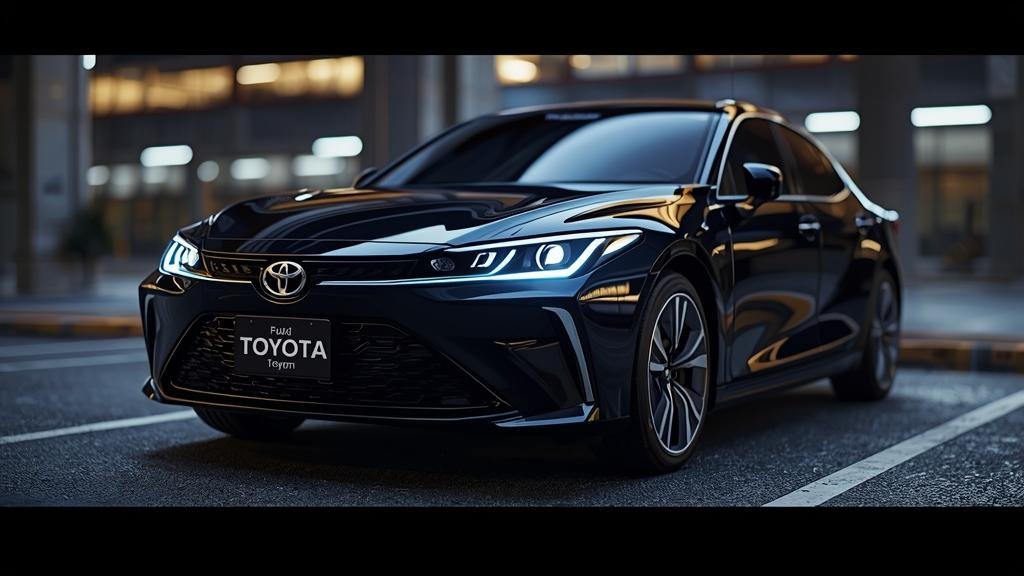
Toyota is pulling the curtain back on its next-gen propulsion tech, promising a 1000km range from a single charge. The headline feature is the company’s progress on Solid State Batteries, which aim to fix the biggest pain points of current EVs: long charging times and range anxiety. Early demos suggest faster charging than today’s best lithium-ion packs, without compromising safety or longevity.
This isn’t just a lab stunt. The automaker is tying the tech to its 2026 rollout plans, signaling a shift from prototypes to production-ready engineering. If the numbers hold up in real-world testing, we’re looking at a new baseline for Toyota 2026 EVs, with energy density and charging speeds that could change how drivers plan long trips.
Quick takeaways
-
- Toyota claims 1000km range potential with its new solid-state architecture.
-
- Targeting sub-15-minute fast charging for everyday use cases.
-
- Safety improvements via non-flammable electrolytes and better thermal stability.
-
- Expected commercial deployment tied to Toyota 2026 EVs, pending supply chain readiness.
-
- Energy density gains should enable lighter packs or longer range without bigger batteries.
What’s New and Why It Matters
The headline is simple: Toyota is moving closer to mass-producing Solid State Batteries for electric vehicles. That matters because current lithium-ion packs trade energy density for safety and longevity. Liquid electrolytes limit how fast you can charge without degrading the cells, and they add thermal management complexity. Solid-state designs replace the liquid with a solid electrolyte, which can unlock higher energy density and faster ion transport. The result Toyota is chasing is a 1000km range and rapid charging that feels closer to refueling a tank than babysitting a plug.
Why this matters now is the timing. Automakers are under pressure to deliver EVs that don’t force compromises. Range is good, but charging speed is what makes long trips practical. If Toyota’s engineering targets hold, drivers get both: enough range to skip daily charging and fast enough top-ups to make stops efficient. For the brand, this is a chance to leapfrog competitors who are still refining high-nickel chemistries and thermal systems. For consumers, it’s the promise of EVs that fit existing habits without new anxieties.
There’s also a safety angle. Solid electrolytes tend to be less flammable than liquid ones, which simplifies pack design and reduces cooling overhead. That could translate to lighter vehicles, better packaging, and potentially lower costs over time. It also opens the door to denser cells that don’t require oversized safety margins. In short, Toyota 2026 EVs are shaping up to be the real-world testbed for whether solid-state can deliver on its decade of promises.
And there’s a broader ecosystem effect. If Toyota scales production, suppliers will ramp materials and manufacturing equipment. That lowers costs for everyone else down the line. Think of it like the way Tesla pushed heat pumps and large castings into the mainstream—Toyota’s success with solid-state could set a new standard the rest of the industry follows.
Finally, the 1000km claim is a psychological threshold. Most drivers don’t need that much range daily, but it removes the “what if” scenarios that keep buyers on the fence. Long holiday drives, towing, cold weather—range buffers help. If charging speeds also improve, the net experience gets closer to the convenience of ICE vehicles, which is exactly what mass adoption requires.
Key Details (Specs, Features, Changes)
Toyota’s approach centers on sulfide-based solid electrolytes, which offer high ionic conductivity—critical for fast charging. The company has demonstrated lab-scale cells with impressive energy density, and the roadmap targets pack-level integration that keeps weight and volume in check. The 1000km range is likely under WLTP or a similar standard; real-world results will vary with driving style, temperature, and load. Still, the engineering direction is clear: increase energy density, reduce internal resistance, and manage heat more effectively than legacy li-ion.
Compared to current EVs, the key change is the electrolyte. Instead of a flammable liquid, you get a solid medium that’s more stable and mechanically robust. This reduces the risk of dendrite-induced shorts and allows for higher charge rates without excessive heat. It also reduces the cooling system’s burden, which can free up space and weight. The tradeoff is manufacturing complexity: solid electrolytes require precise layering and interface engineering to avoid gaps that impede ion flow. Toyota is solving this with new roll-to-roll processes and sintering techniques to make uniform layers at scale.
What changed vs before:
In earlier prototypes, solid-state cells often struggled with interface resistance—the boundary between the solid electrolyte and the electrodes. That resistance limited power and charging speed. Toyota’s recent updates suggest improved electrode-electrolyte interfaces and better cell compression methods, which maintain contact during cycling. This is a major step because it translates lab energy density into usable pack performance.
Thermal management is also different. Li-ion packs rely on complex cooling loops to keep cells within safe windows, especially during fast charging. Solid-state designs can tolerate higher temperatures and have fewer exothermic failure modes. That means simpler cooling, potentially fewer sensors, and more predictable behavior in extreme conditions. For drivers, this should mean more consistent charging speeds and less throttling on hot days.
Material sourcing is another evolution. Sulfide electrolytes require careful handling because they can release hydrogen sulfide if exposed to moisture. Toyota’s manufacturing lines are designed with dry rooms and sealed environments to mitigate this. The supply chain for sulfides is smaller than for conventional salts, but scaling is underway. As production ramps, expect improved purity standards and lower defect rates, which directly impact cycle life and reliability.
At the pack level, the design philosophy shifts from “add more cells” to “use better cells.” Energy density gains let you hit the same range with fewer modules, simplifying the structure and lowering the Bill of Materials. That can reduce cost over time, though early units may carry a premium. The net effect is a vehicle that’s lighter, charges faster, and should age more gracefully—key points for anyone comparing Toyota’s 2026 lineup to today’s options.
How to Use It (Step-by-Step)
Step 1: Confirm your vehicle uses Solid State Batteries. Check the owner’s manual, spec sheet, or dealer documentation. Look for battery chemistry notes or packaging labels indicating solid-state modules. This matters because charging profiles and thermal behavior differ from li-ion.
Step 2: Understand the charging curve. Solid-state packs can accept high rates longer, but still taper near the top. Aim to charge between 10% and 70% for the fastest stops. If you routinely charge to 100%, schedule it for the end of a session to avoid slowing the curve while you’re waiting.
Step 3: Use compatible chargers. High-power DC fast chargers (150kW+) will unlock the pack’s potential. If you’re on lower-power chargers, don’t worry—the pack will adapt, but you won’t see the headline sub-15-minute top-ups. At home, a Level 2 charger is fine for daily use; the pack’s efficiency reduces the need for frequent full charges.
Step 4: Manage temperature smartly. Precondition the battery before fast charging if the vehicle offers it. Cold packs accept charge slower. Solid-state helps, but physics still applies. On long trips, plan a charger stop after sustained highway driving to keep the pack warm and ready.
Step 5: Monitor degradation signals. Solid-state should degrade slower, but you’ll still see capacity fade over years. Use the vehicle’s energy history to track range per charge. If you notice a sudden drop, check for software updates or schedule a diagnostic—sometimes it’s a balance issue rather than physical wear.
Step 6: Align with Toyota 2026 EVs timelines. If you’re buying in 2026, ask whether your trim includes the full solid-state pack or a hybrid approach. Some models may use solid-state in higher trims first. Confirm warranty terms for energy retention and fast-charging usage.
Step 7: Plan trips around charging speed, not just range. With 1000km potential, you can space stops farther apart, but you’ll still benefit from shorter, more frequent stops if you want to minimize total travel time. Think “charge while you stretch” rather than “charge while you eat.”
Step 8: Keep firmware updated. Battery management algorithms improve over time. Updates can refine charging curves, thermal thresholds, and range estimates. If your car supports OTA updates, enable them; if not, schedule periodic dealer updates to get the latest optimizations.
Step 9: Practice safe storage. If you’ll park for weeks, leave the pack at around 50% state of charge and avoid extreme temperatures. Solid-state is more tolerant, but long-term storage best practices still apply to preserve health.
Step 10: Validate real-world results. Don’t rely solely on the 1000km claim. Track your own efficiency (Wh/km) across seasons. Use that data to plan realistic routes and charging stops. The tech is promising, but your driving style and conditions will determine your actual range.
Compatibility, Availability, and Pricing (If Known)
Toyota has indicated that solid-state technology will debut on select models tied to its 2026 rollout, but exact trim availability and pricing have not been publicly finalized. Expect initial deployment on higher-end or flagship EVs where the cost premium is easier to absorb. Broader availability across mainstream trims will likely follow as supplier capacity and yields improve. If you’re shopping in 2026, ask dealers for specific battery chemistry options on the window sticker or build sheet.
Charging compatibility should be broad. The packs will work with existing CCS or NACS networks (depending on region), and the vehicle’s BMS will manage the handshake and power delivery. You won’t need new home chargers for daily use, but to hit the fastest public charging speeds, you’ll need high-power DC stations. Pricing details are still under wraps; early adopters may pay a premium, but costs should drop as manufacturing scales. For now, the safest approach is to treat availability as targeted and confirm specifics at purchase time.
Common Problems and Fixes
Symptom: Slower charging than expected at high-power stations.
Cause: The pack is outside the optimal temperature window or the charger is derated.
Fix: Precondition the battery before arrival; verify charger power with the station app; try a different stall; ensure the session starts above 10% and below 80% for peak rates.
Symptom: Unexpected range drop in cold weather.
Cause: Lower ion mobility and higher cabin heating demand.
Fix: Precondition before driving; use seat heaters instead of blasting cabin heat; plan shorter trips or more frequent charging in extreme cold; update BMS software for improved cold-weather logic.
Symptom: Charging stops early or tapers sharply.
Cause: Cell balancing or high state of charge; thermal limits.
Fix: Avoid charging to 100% at every stop; schedule full charges for the end of the day; if it happens frequently below 70%, schedule a diagnostic for cell balance.
Symptom: Dashboard warnings related to battery or charging.
Cause: Software glitch, dirty charge port, or communication error.
Fix: Power cycle the vehicle; inspect and clean the charge port; try a different charger; if warnings persist, pull logs via the OEM app and contact service.
Symptom: Reduced efficiency after a software update.
Cause: New algorithms need to relearn your driving patterns.
Fix: Drive normally for a few cycles to allow adaptation; recalibrate range estimates by charging to a known percentage and tracking actual consumption; report persistent regressions to the OEM.
Symptom: Public charger won’t initiate session.
Cause: Handshake or authentication issue.
Fix: Use the charger’s app to start the session; check for NFC/RFID card issues; toggle vehicle’s charging port lock; if possible, try plug-and-charge compatible networks.
Symptom: Vehicle reports lower capacity than advertised.
Cause: Normal degradation or calibration drift.
Fix: Perform a full charge-discharge-charge cycle if recommended by the manual; verify with multiple sessions; if the drop is severe, open a warranty claim.
Security, Privacy, and Performance Notes
As vehicles gain OTA updates and connected features, the battery system is part of the attack surface. While the solid-state pack itself doesn’t introduce new risks, the BMS and charging logic do. Keep software updated, use strong account credentials, and enable multi-factor authentication for the vehicle app. Avoid public USB ports for charging; use your own cables and adapters. If you’re privacy-conscious, review what telematics data is shared and disable nonessential logging.
Performance-wise, solid-state should sustain high charge rates for longer periods, but it’s not magic. The charger’s capability, temperature, and state of charge still dictate the curve. Don’t expect 0–100% in 10 minutes; plan for 10–80% in around 15 minutes under ideal conditions. Also, while solid-state reduces thermal runaway risk, it doesn’t eliminate it. Follow manufacturer guidelines for towing, track use, and extreme climates. Finally, remember that range claims are best-case; real-world efficiency depends on speed, elevation, and accessory use.
Final Take
Toyota’s push into Solid State Batteries is a credible step toward EVs that charge fast and go far without tradeoffs. The 1000km headline is aspiral, but the engineering direction—better energy density, safer chemistry, and simpler thermal management—aligns with what drivers actually need. If the company hits its targets, Toyota 2026 EVs could reset expectations for long-distance travel and daily convenience. For now, treat the numbers as guideposts, watch for independent testing, and plan your next purchase around confirmed specs rather than promises.
FAQs
Q: Will solid-state batteries work with existing charging networks?
A: Yes. The vehicle’s BMS handles communication and power limits. You’ll get the best speeds at high-power DC stations, but standard chargers will still work.
Q: Are solid-state batteries safer than lithium-ion?
A: Generally, yes. They use non-flammable electrolytes and are more resistant to thermal runaway, but they still require proper handling and should follow manufacturer guidelines.
Q: How long will a solid-state EV battery last?
A: Expect slower degradation than current li-ion packs, but exact lifespan depends on usage, temperature, and charging habits. Warranties will clarify retention targets.
Q: Can I charge to 100% every day?
A: You can, but it may slow the charging curve and accelerate wear. For daily use, 80% is typically faster and healthier; save 100% for long trips.
Q: When will these batteries be widely available?
A: Toyota has signaled rollout tied to 2026 models, likely starting on select trims. Broader availability will follow as production scales and yields improve.